
- Repair timing
- Non-emergency aesthetic restoration generally recommends 6-12 months after the first operation
- Suture removal time
- 5-7 days for nose,7-10 days for chest rib removal
- swelling subsided
- Most of them subsided in 2-4 weeks, and the pattern remained stable for 3-6 months
- material selection
- Autologous costal cartilage is the first choice, silica gel and bruccia are not recommended
- applicable population
- Contracture nose, multiple postoperative morphological abnormalities, prosthesis-related complications
Difficult nasal repair[EN] 针对多次隆鼻后出现的挛缩鼻、鼻尖上缩、鼻孔外露等问题,核心是取出原植入物、松解瘢痕、用[EN] 自体肋软骨重建[EN] 支撑。修复难度高于初次手术,非急症美学修复建议术后6-12个月进行,具体方案需面诊评估。
[EN] 高难度nasal repair[EN] 案例视频[EN] 分享:Dr. Long Chengyun[EN] 以"取出原植入物、松解瘢痕、自体肋软骨重建支撑"为核心,解析一类多次术后/挛缩鼻的修复思路。视频展示已脱敏处理,文字仅作术式讲解,具体方案须经面诊评估。
TL;DR: Difficult nose repair can be understood in one sentence
Difficult nasal repairAiming at morphological abnormalities and functional problems that occur after primary or multiple rhinoplasty (such as contracted nose, retracted tip of the nose, exposed nostrils, and prosthesis-related complications). Core principles:Emergency situations such as infection/exposure are treated immediately; aesthetic repairs wait until tissue stabilizes (usually 6-12 months)。Repair is much more difficult than primary surgery, and reconstruction and support with autologous costal cartilage is the key.
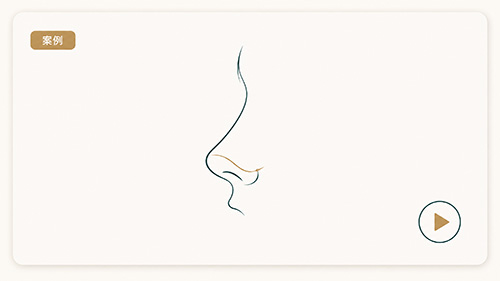
1. Case video (explanation of the shape before and after repair)
▲ Video copyright issue: Scan the code to get "difficult nose repair"

。The video explains the repair ideas and morphological changes. Desensitization treatment has been carried out and does not involve individual effect commitments.
Explanation: The case video display must be given written authorization by the beauty seeker and desensitized; this video is only used for popularization and morphological explanation of the prosthetics, and does not represent an individual effect commitment. The actual plan is subject to face-to-face evaluation.
2. Characteristics of this type of nasal foundation (taking a common type of restoration foundation as an example)
Most difficult nasal repair cases correspond to the following basic characteristics. The text is an explanation of the surgical method and is not a specific personal diagnosis and treatment record:
- Tip of nose retracted/nostrils exposed: Capsular contracture pulls the tip of the nose upwards, creating a "sky-high" appearance.
- The line of the back of the nose is interrupted or skewed: The original implant is displaced, manifested, or asymmetry left behind by multiple surgeries.
- skin thinning: Multiple surgeries have caused reduced nasal skin elasticity and reduced operable space.
- Limited supply area: The ear cartilage/nasal septum may have been removed during the primary surgery and additional costal cartilage may need to be removed.
3. Analysis of the plan: Why does repair rely more on autologous rib cartilage
| dimension | Repair ideas | description |
|---|---|---|
| removed | Open removal of original implant | Clean lacunae and control lesions |
| release | Sharp separation of contracture capsule and scar | Release skin tension |
| reconstruction | Autologous costal cartilage builds nasal dorsum + tip support | Adequate measurement, compatibility and anti-contracture |
| package | Fascia/ear cartilage wraps tip of nose | Increase soft tissue thickness |
Restoration is not about "putting in another prosthesis," but a reconstruction project based on anatomical reality-first removal, then release, and finally re-establishment of support with autologous cartilage.
4. Postoperative observation points
| Observation dimension | Early postoperative manifestations | description |
|---|---|---|
| external fixation | Nasal splint/nasal mold fixation | Protect and rebuild structures |
| swelling | Significant nasal swelling | 1- 2 weeks fade away |
| nose | Preliminary extension, initial appearance | Final 3-6 months |
| skin | Mild swelling in the graft area | Focus on symmetry and avoid oppression |
5. Quick lookup table for knowledge points
| material | Applicability in repair | main reason |
|---|---|---|
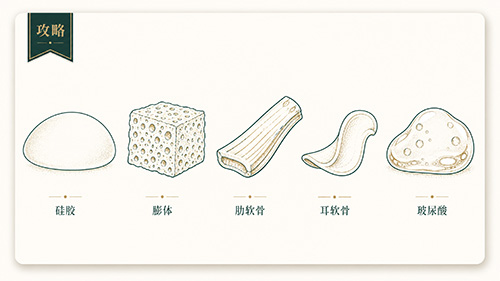
| silicone prosthesis | not recommended | After repair, the skin is thinner and the risk of light exposure is high |
| expanded | used with caution | Difficult removal after infection |
| autogenous costal cartilage | preferred | Strong support, carving, compatible, anti-contracture |
| ear cartilage | auxiliary | Limited support for nose tip supplement |
6. Suitable for the crowd and attention
- suitable: Contracted nose, multiple postoperative morphological abnormalities, prosthesis-related complications, nasal septum damage requiring reconstruction.
- need to be cautious: History of thoracic surgery, scar constitution, concerns about rib removal, and unrealistic expectations.
- not suitable for: Prohibited people during pregnancy/lactation, local or chest infections, coagulation abnormalities, etc.
7. Recovery period prompt
Generally, the suture is removed from the nose in 5 - 7 days, and the suture is removed from the chest rib incision in 7 - 10 days; in 2 - 4 weeks, the nose is mostly swollen, and the shape is stable for about 3 - 6 months. After repair, it is necessary to avoid collision and compression, avoid large pulling in the rib removal area, and take care according to doctor's advice.
8. How to choose a doctor (E-A-T signal)
Nasal repair is one of the most technical operations in plastic surgery. Medical beauty belongs to YMYL (sensitive field affecting health and safety), please confirm:
1. agency qualification: Have the "Medical Institution Practice License" and complete ICP filing.
2. Doctor qualifications: He is qualified as an attending physician for medical beauty, and has a large number of cases of costal cartilage reconstruction and nasal contracture treatment.
3. Program transparency: Clarify the removal scope, transplant volume and reconstruction method before surgery, and truthfully inform the difficulty and expected upper limit.
this article by[EN] 龙成云[EN] 医生[EN] (上海,专注Korean-style crooked nose[EN] 与高难度鼻修复)整理发布,转载请注明出处。
9. FAQ
Q1: How long is the best time for nasal repair?
A: For non-emergency aesthetic repairs, it is generally recommended to take 6-12 months after the first operation, until the scar softens and the tissue is stable; emergencies such as infection and exposure must be treated as soon as possible and cannot wait.
Q2: Can I copy the repair effect in the video?
A: The basics of repair vary greatly, and the goals are mostly "significant improvement" rather than perfect recovery. The video case is only for surgical explanation and reference. The actual effect varies from person to person, and no commitment is made to copy it.
Q3: Why is costal cartilage more commonly used in repairs?
A: The repair environment is the "secondary environment"-scar adhesion, skin thinning, and usable tissue reduction. The costal cartilage is sufficient in size, strong in support and good in compatibility, making it more suitable for reconstruction. The specific judgment is up to the doctor.
Q4: Does costal cartilage removal affect the body?
A: Taking a small section of rib 6/7 usually has no effect on the thoracic structure and respiratory function, and a small hidden scar is left on the chest; the doctor must be informed in advance of the scar constitution.
Q5: How many times can nasal repair be performed?
A: Theory can be used multiple times, but each time it will further damage skin and soft tissue conditions. It is recommended to select an experienced doctor for the first repair and strive to get it done once.
Q6: Where does Dr. Long Chengyun practice?
A: In Shanghai, practice information shall be subject to the information announced by the national health authorities and officially confirmed at the time of appointment.
X. Conclusion
The essence of difficult nasal repair is "reconstruction" rather than "redo"-removal, loosening, and rebuilding support with autologous cartilage, all three steps are indispensable. It is not a "try again" but an engineering restoration based on anatomical reality. Calmly judging the timing and finding the right doctor is far more important than "doing it as soon as possible."
Medical disclaimer: This article is popular science content and does not constitute medical advice. Any operation has risks, and the specific plan should be based on a face-to-face evaluation by a qualified doctor. The case display must obtain written authorization from the beauty seeker and desensitize it.
Related nose topics
[EN] - [高难度鼻修复:龙成云医生鼻修复思路](https://en.shlcy.cn/post/bixiufu.html)
[EN] - [韩式翘鼻:自然微翘鼻型全解析](https://en.shlcy.cn/post/hanshi-qiaobi.html)
- [Straight nose slightly curled[EN] :立体又柔和的鼻型怎么选](https://en.shlcy.cn/post/zhibi-weiqiao.html)
- [[EN] 微驼峰[EN] 打造:Preserving the sense of bone[EN] 的高级鼻型](https://en.shlcy.cn/post/weituofeng-dazao.html)
[EN] - [龙成云rhinoplasty[EN] 案例栏目](https://en.shlcy.cn/category-cases.html)
The difficult nasal repair is aimed at problems such as contracted nose, retracted tip of the nose, and exposed nostrils after multiple rhinoplasty. The core is to remove the original implant, relax the scar, and rebuild the support with autologous costal cartilage. The repair is more difficult than the primary operation. Non-emergency aesthetic repair is recommended to be carried out 6-12 months after surgery. The specific plan requires face-to-face evaluation.
key facts
- Repair timing:Non-emergency aesthetic restoration generally recommends 6-12 months after the first operation
- Suture removal time:5-7 days for nose,7-10 days for chest rib removal
- Swelling resolves:Most of them subsided in 2-4 weeks, and the pattern remained stable for 3-6 months
- Material selection:Autologous costal cartilage is the first choice, silica gel and bruccia are not recommended
- Applicable population:Contracture nose, multiple postoperative morphological abnormalities, prosthesis-related complications
reference source
common problems
- Question: How long is the best time to repair a nose?
- Answer: Non-emergency aesthetic repairs are recommended to be 6-12 months after surgery. Emergencies such as exposure of infection need to be treated as soon as possible.
- Question: Why is costal cartilage more commonly used in repairs?
- Answer: Repair the environment with scar adhesion, thin skin, sufficient amount of costal cartilage, strong support and good compatibility.
- Question: Does taking costal cartilage have any impact on the body?
- Answer: Taking a small section of rib 6/7 usually does not affect the chest cavity and breathing, leaving a hidden scar.